- American tariffs might lead to higher costs for Australian consumers.
- PODCAST: An in-depth look at the controversy surrounding the war plans group chat, along with Trump’s reaction to his new portrait – all on Welcome to MAGAland. Tune in now.
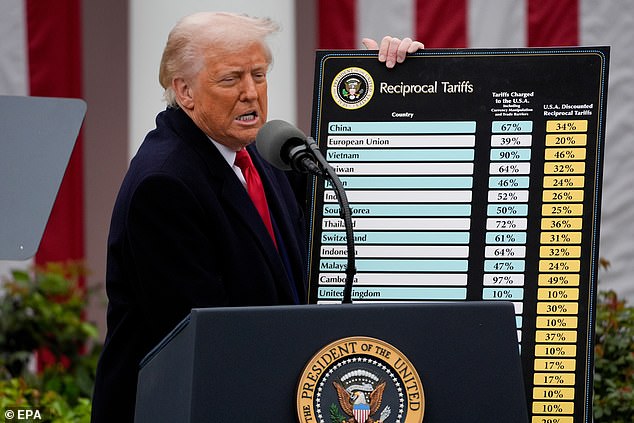
Donald Trump New 10 percent 'Liberation Day' tariffs imposed by Australia on exports to the U.S. might ultimately lead to higher prices for local consumers when they check out at supermarkets.
The American president criticized Australia for not easing its stringent biosecurity regulations, which would be necessary to obtain an exception from new reciprocal tariffs imposed on one of their largest exports to the U.S., namely beef.
'Australia has banned them, even though they are wonderful people and wonderful at everything else, but they prohibit American beef,' he stated.
'That said, we imported $3 billion worth of Australian beef from them solely in the previous year.'
'They won't take any of our beef.
They aren't interested in it because they don't want it to impact their local farmers, and honestly, I can understand where they're coming from. However, as of midnight tonight, we'll be implementing similar measures.
A kilogram of sirloin steak costs Woolworths is currently priced at $28.
However, the Australian Food Sovereignty Alliance, which represents 350 small-scale farmers, is concerned that rump steak could end up priced at $56 for Australian shoppers at supermarkets.
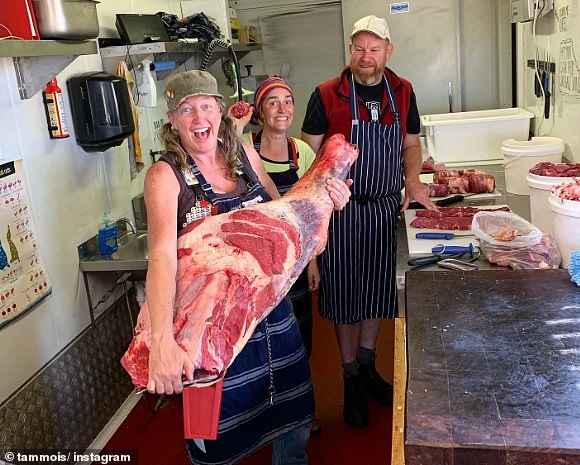
Tammi Jonas, a spokesperson for organic beef cattle production based in Daylesford, Victoria, stated that the new American tariffs on imported agriculture products will lead to increased purchases of Australian beef as nations seek alternatives to trade with the U.S.
"We are well aware of the strong global demand for Australian beef, and I believe this trend is only going to intensify," she stated to Daily Mail Australia.
In a worldwide supply shortage like this, we might witness rump steak prices surpassing $50 per kilogram.
'What you had wasn’t just a family dinner; it was an upscale luxury experience.'
Doctor Jonas mentioned that increased export prices could result in fewer Australian meats being available for local consumers, particularly if the United States market were not an option.
"I'd say there's a high probability of that, indeed," she stated.
'Even if we still have an ample supply of beef sold within Australia , the prices are sure to increase.
'When operating in international markets, you have to adapt to the fluctuations and if products fetch higher prices abroad, companies won’t lower their rates domestically.'
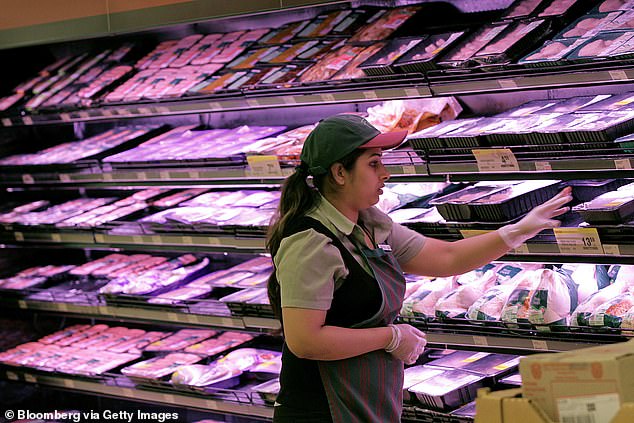
However, Angus Gidley-Baird, a senior analyst specializing in animal proteins at RaboResearch, stated that premium steaks at grocery stores were improbable due to the robust supply of Australian beef following recent precipitation events.
"We generated all-time high quantities of beef throughout last year; therefore, I can’t comprehend why we'd face a scarcity within our domestic market leading to increased pricing," he stated to Daily Mail Australia.
The exports serve as our markets where we channel the extra production.
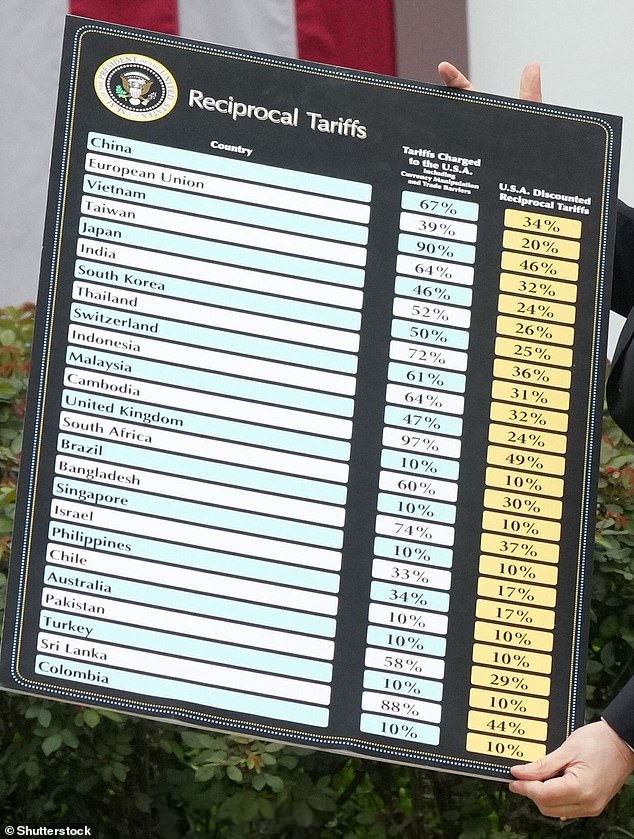
Australia has faced across-the-board 10 percent tariffs, aligning with countries like the UK, Singapore, Brazil, and Chile.
However, China faces a significantly higher tariff of 34 percent, as opposed to 25 percent for South Korea and 24 percent for Japan.
According to Meat and Livestock Australia statistics, the United States became Australia’s largest export destination for beef in 2024, significantly outpacing Japan, South Korea, and China.
Out of the Australian beef exported to the United States, 96 percent consisted of the leaner, grass-fed type, which was delivered either chilled or frozen.
Americans have been grappling with a prolonged dry spell, resulting in much of their beef being more fatty and grain-fed.
Beef exporters from South America, namely Argentina and Brazil, are grappling with insufficient precipitation.
Similar to Australia, they would face 10 percent tariffs as well, indicating that other countries engaged in beef production are experiencing comparable pressures.
"If we face a substantial tariff that applies universally, our competitive standing will not change," Mr. Gidley-Baird stated.
On Thursday, The Australian Agricultural Company and Elders will likely encounter share market pressures.
Last year, Australian meat exports to the United States amounted to $4.2 billion, with approximately 400,000 tons of beef shipped to the American market.
Jessica Amir, a market strategist at Moomoo, stated that one of Australia’s primary exports to the U.S. faced significant danger.
"Donald Trump stated 'no more.' Simply put, this decision appears to impact what has been Australia’s largest export to the U.S.," she explained.
It seems that Trump might impose restrictions on importing Australian beef; however, nothing is confirmed until further details emerge.
Mr Gidley-Baird stated that despite any import duties, the Americans, who generate more fatty, grain-fed beef, would still require the leaner, Australian grass-fed beef for making hamburger patties.
"The United States still relies on imports due to insufficient domestic production," he stated.
They will still require Australian beef — the drought conditions are improving in the U.S., but they've They sold off their livestock, and both herd size and output have decreased. .
What Australia exports to the U.S. enhances their production system because it provides a counterbalance to the richer products used for making hamburgers.
They require the product, and I'm among the largest suppliers of it—logic dictates that even without my involvement, they would still make the purchase.
On the outskirts, robust U.S. demand for grass-fed beef has caused an increase in prices for Australian lean mince, which is currently retailing at $15.50 per kilogram at Woolworths.
Mr. Gidley-Baird stated that "The U.S. market has been quite robust, requiring a significant volume of products, which is exerting some upward pressure on minced meat and lean cuts' prices."
The Australian Food Sovereignty Alliance has observed ground meat prices increasing to over double their original price, now costing $36 per kilogram.
But Dr Jonas predicted tariffs on Australian beef would see American demand plunge, despite the fact they are in drought with an undersupply of grass-fed beef.
'"Both Americans and Australians are facing equally severe cost-of-living crises," she stated.'
The Australian Food Sovereignty Alliance did not conduct particular economic modeling regarding Australian beef prices following the implementation of the Trump administration's agricultural tariffs on Thursday.
However, it contended that China experienced an outbreak of African swine fever in 2019. resulted in pork prices being doubled, As supplies dropped by 40 percent.
The coalition fights against major agribusiness corporations such as JBS Foods Australia, which controls feedlots and slaughterhouses.
Dr. Jonas mentioned, "Local farmers such as ourselves are being denied access to the slaughtering facilities."
Although this seems beneficial for Australia – considering we believe “we can increase our exports” – the truth is that only a small number benefit from this increased exporting activity.
The most recent 'Liberation Day' duties imposed on Australian agricultural and pharmaceutical products come after the 25 percent tariffs on steel and aluminum, which were implemented on March 12.
Read more