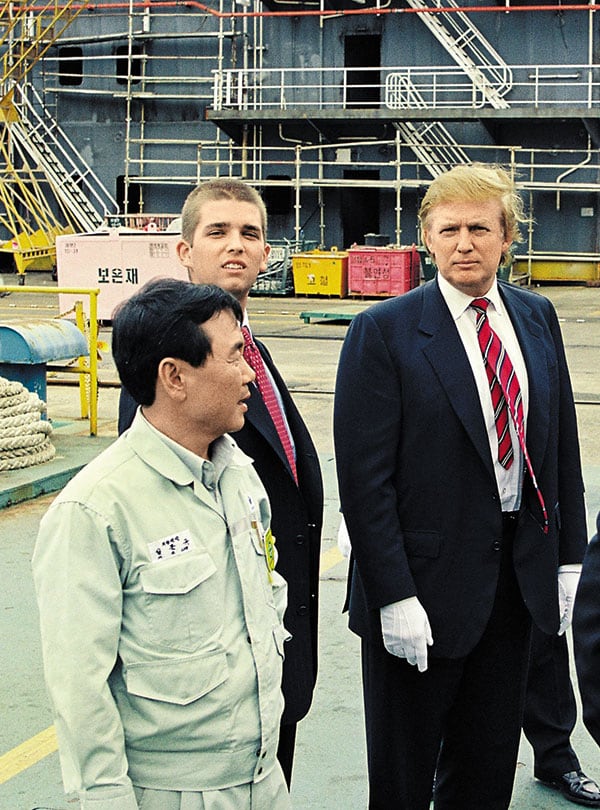
Shortly after concluding a phone call with South Korea’s acting President Han Duck-soo on Apr. 8, U.S. President Donald Trump took to Truth Social to highlight “one-stop shopping,” referencing cooperation in the shipbuilding sector, large-scale purchases of U.S.-produced liquefied natural gas (LNG), and joint investment in an Alaskan gas pipeline project. The move was seen as unusual for Trump, who had typically demanded that other countries put forward their own “cards” to negotiate lower tariffs—this time, he was the one offering proposals.
Attention is now turning to whether South Korea, home to one of the world’s most competitive shipbuilding industries and one of the top three LNG importers alongside China and Japan, could play a role in reducing the mutual tariff rate on LNG, which currently stands at around 25%. Arriving in the United States on the same day, Jeong In-kyo, head of the Trade Negotiations Office at the Ministry of Trade, Industry and Energy, said, “We are competitive in areas such as shipbuilding and LNG infrastructure construction, so we plan to bring those topics to the negotiating table.”
In shipbuilding, the urgency appears to lie on the American side. With China’s growing naval capabilities posing a challenge to the U.S. Navy, the U.S. is increasingly in need of shipbuilding and maintenance support and is reaching out to South Korean shipyards. The U.S. Navy plans to invest $1.075 trillion over the next 30 years to acquire 364 vessels and is even moving to revise related laws—unchanged in six decades—to allow allies to build its warships.
South Korean shipbuilders are also looking to expand their presence in the U.S. market. On Apr. 7, HD Hyundai Heavy Industries (HD HHI) signed an agreement with Huntington Ingalls Industries, the largest military shipyard in the U.S., to collaborate on production automation, robotics, artificial intelligence (AI) implementation, and workforce training. Hanwha Ocean, which acquired the Philly Shipyard in Philadelphia last June, plans to obtain certification for military shipbuilding by next year and enter the U.S. market for special-purpose vessels. “Although China and the U.S. were our top export destinations last year, we exported few ships to either country,” said a source from the shipbuilding industry. “This partnership could provide an opening into the U.S. market.”
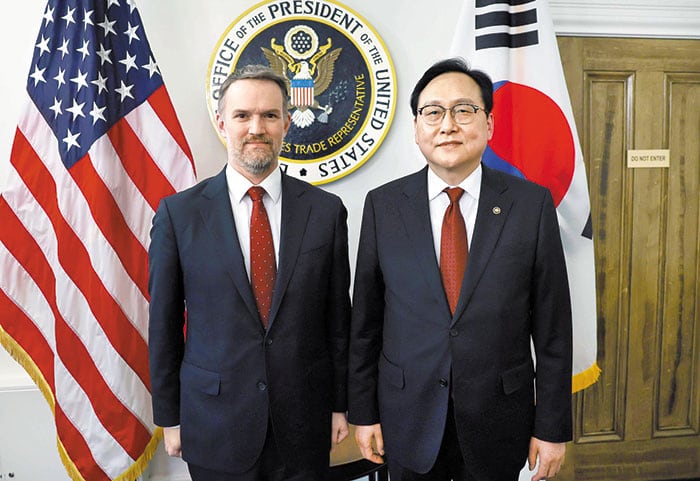
Nonetheless, the Alaskan LNG project poses additional hurdles. Despite President Trump’s frequent emphasis on this initiative and Taiwan showing readiness for substantial acquisitions, numerous experts in South Korea feel pressured into potentially endorsing US requests. Concurrently, increasing pressure advocates negotiating tariff cuts as part of these discussions. During his address at the National Assembly on April 9th, Minister of Trade, Industry and Energy Ahn Duk-geun stated, "It is essential we discuss with the United States about assessing the commercial feasibility of the LNG project along with potential cooperative strategies," signaling a careful stance towards the matter.
Even though the brief shipping duration of only nine to eleven days is considered a plus for Alaskan LNG, doubts persist regarding the project’s viability. Concerns have emerged about rushing into significant commitments like purchasing substantial amounts of LNG or joining the 1,300-kilometer pipeline initiative prematurely. South Korea’s state-run gas company, Kogas, currently grapples with financial difficulties, complicating efforts to gather the necessary funds for this multibillion-dollar endeavor estimated at around $44 billion.