Last year, toys and various items from China accounted for the majority among the 4,127 hazardous non-food products reported through the EU's Safety Gate market monitor — marking the peak count since this fast-response mechanism began operations in 2003, which also represents twice as many warnings compared to what was observed merely two years prior.
Cosmetics accounted for more than one-third of all reported products and continued to be the most commonly reported category. Notably, 97% of these cosmetics included the synthetic scent ingredient butylphenyl methylpropional, which is commercially known as Lilial due to its flowery aroma.
The European Chemicals Agency classifies this substance as harmful to reproductive health, capable of inducing skin allergies, and under scrutiny for possible interference with hormone function. The utilization of this substance has been prohibited within the EU territory starting from March 2022.
Toys accounted for 15% of alerts, and the report comes just days after EU lawmakers agreed the text of a new toy safety regulation, which will ban the use of harmful chemicals such as PFAS, endocrine disruptors and bisphenols in toys.
As per the new legislation, every toy must possess a Digital Product Passport to stop unsafe items from being sold both online and offline within the European Union. The early warning system also highlights other product types such as electronic devices which account for 10% of cases, automobiles with 9%, and chemical substances at 6%.
The European consumer rights organization BEUC indicated that the issue stems less from inadequate laws than from insufficient enforcement, coupled with the increasing tendency toward purchasing products via websites and smartphone applications.
According to BEUC Director Agustín Reyna, market surveillance authorities require additional financial, technical, and personnel resources along with enhanced legal authority over online marketplaces to guarantee consumer protection from hazardous goods.
As authorities struggle to monitor all items entering the EU market, the consumer organization cautioned that official alerts reported through the warning system likely reflect just the "tip of the iceberg." They emphasized that determining the exact quantity and volume of products associated with each notification remains uncertain.
Stemming the tid
Alongside the upcoming stringent toy safety regulations, the European Union implemented a comprehensive General Product Safety Regulation in December. The Commission is collaborating with various national authorities to ready themselves for an initial online "sweep" aimed at detecting violations of these guidelines across different websites.
Given that 40% of all alerts relate to products imported from China — which jumps to 61% when cosmetic items, primarily sourced from Italy, are excluded—the European Union administration has collaborated with the production powerhouse since 2006. This collaboration aims to make sure companies based in China understand and comply with the EU’s product regulations.
As part of an agreement reached in 2023, the trade allies committed to responding within 21 days to any Safety Gate warnings and scheduled periodic sessions to address shared enforcement issues.
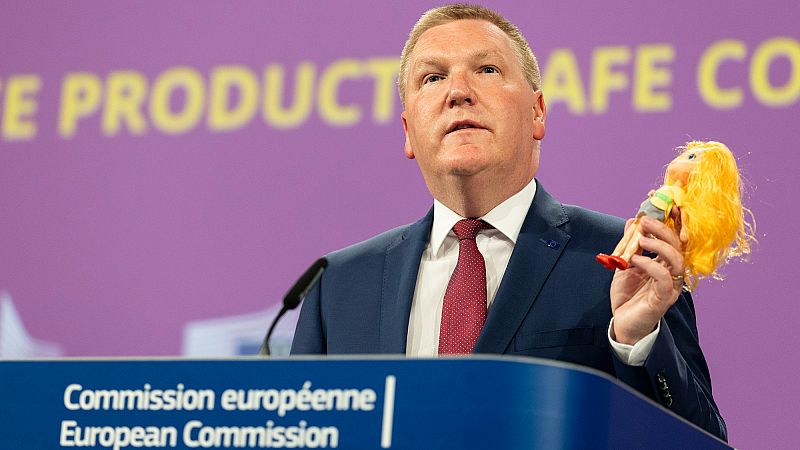
"We must not allow everyday items we use to damage either our well-being or the surroundings we inhabit," stated Michael McGrath, who oversees consumer safety at the European Union, during a news briefing. He showcased a plastic toy discovered to have harmful phthalate chemicals.